Free UK Train Log Sheet FREE
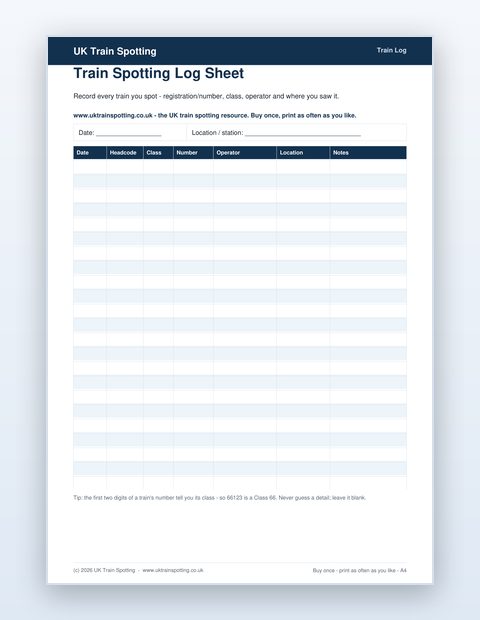
A free 10-line sample of our printable log sheet — try it, then get the full pack.
Peek inside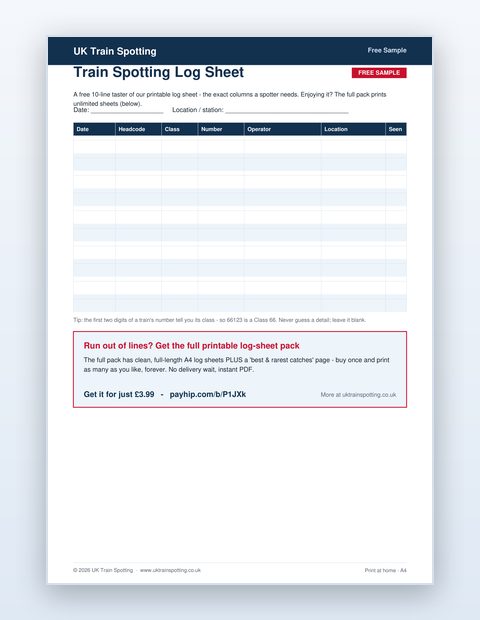
Download free →
Every train carries numbers, and once you know how to read them, a passing train tells you a story. Here's a clear guide to how British trains are numbered — classes, fleet numbers and headcodes.
Photo: Secret Pilgrim from England · CC BY-SA 2.0 · via Wikimedia Commons
Most modern British locomotives and multiple units are numbered under TOPS (the Total Operations Processing System), introduced in the 1970s. It gives every locomotive and unit a class and an individual number, so each one can be identified precisely — which is exactly what a spotter needs.
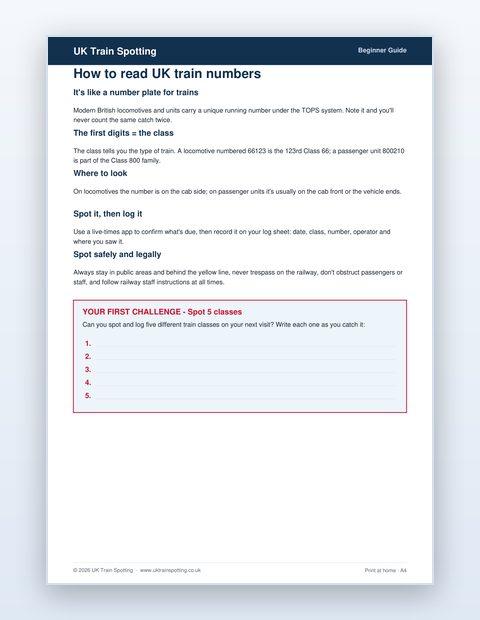
The class is the type of train. For locomotives, the first two digits of the number are the class: a locomotive numbered 66123 is a Class 66, and 37401 is a Class 37. Classes are grouped roughly by type — for example, many diesel locomotive classes fall in the 20s–60s and electric locomotives in the 80s–90s, while multiple units use higher number ranges.
A locomotive's number is unique to that machine and usually painted on the cab side. Note the full number — for example 66001 — and you've logged that specific locomotive. Some locomotives also carry names, which is a nice bonus to record.
Passenger multiple units (trains that aren't hauled by a separate locomotive) are numbered too. The unit number identifies the whole set — for example a Class 800 set numbered 800210 — while the individual carriages within it carry their own vehicle numbers. For spotting, the unit number is usually what you record.
You may hear about headcodes (also called reporting numbers) — a four-character code such as 1A25 that identifies a particular train service, not the locomotive. The first digit and letter indicate the type and route of the service. Older locomotives once displayed these on roller blinds or panels; today they're used behind the scenes for timetabling and can be looked up on live-times tools.
So when a train passes, the class tells you the type, the running or unit number tells you the individual train, and the headcode (if you look it up) tells you the service it's working. Record the class and number on your log sheet and your collection grows with every visit. New to it all? Start with our beginner's guide, or browse the train classes.
For locomotives, the first two digits are the class — the type of train. So 66xxx is a Class 66 and 37xxx is a Class 37. The remaining digits identify the individual locomotive.
The class (and running number) identifies the physical locomotive or unit. A headcode, or reporting number, such as 1A25, identifies the train service being run — its type and route — rather than the machine hauling it.
Multiple units have a unit number identifying the whole set (for example 800210), while each carriage inside also has its own vehicle number. Spotters usually record the unit number.
Print it at home and record your first catches this weekend.
A free 10-line sample of our printable log sheet — try it, then get the full pack.

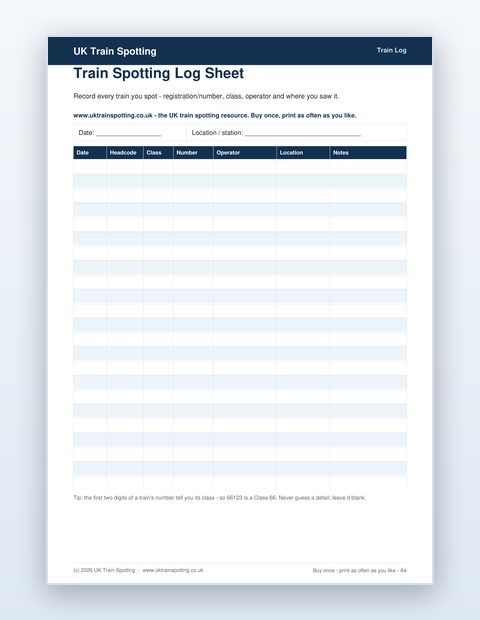
The essential printable log: date, headcode, class, number, operator, location and notes.
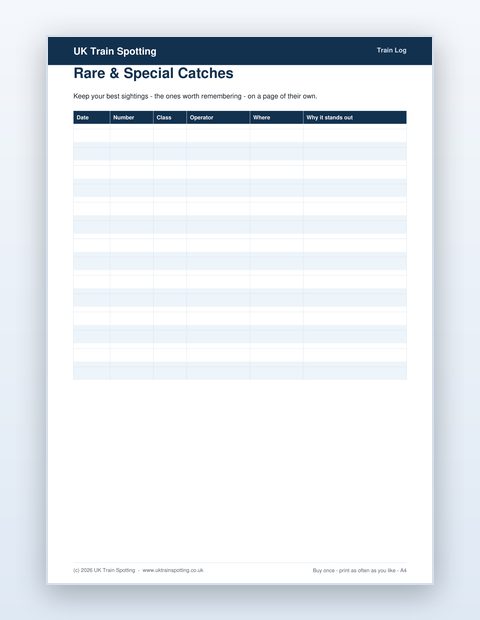

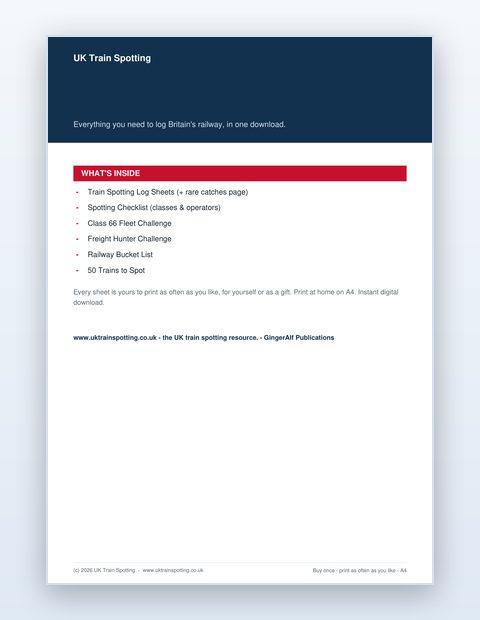
Every log sheet, checklist and challenge together — the best-value flagship pack.