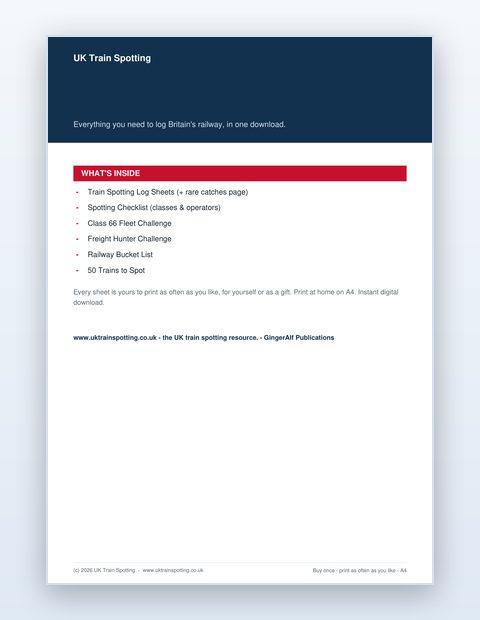
Free UK Train Log Sheet FREE
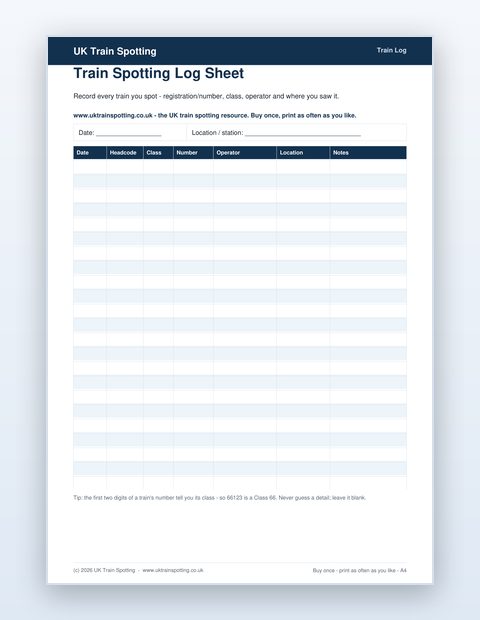
A free 10-line sample of our printable log sheet — try it, then get the full pack.
Peek inside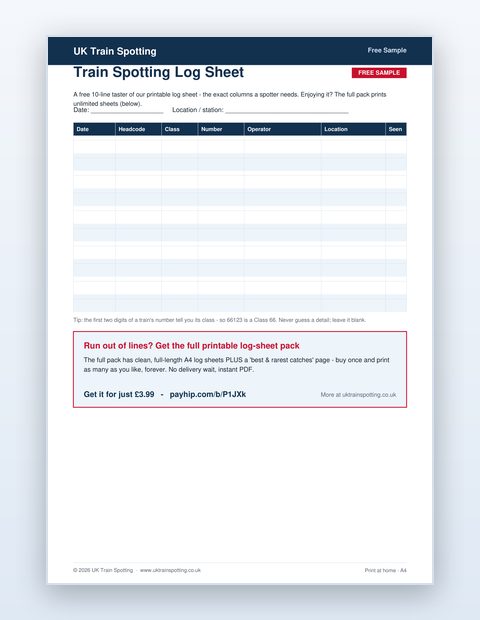
Download free →
Train spotting is one of the most welcoming hobbies there is — cheap to start, easy to learn, and open to everyone from curious children to lifelong enthusiasts. Here's everything you need to begin.
Photo: mattbuck (category) · CC BY-SA 3.0 · via Wikimedia Commons
At its simplest, train spotting means watching trains and recording the ones you see — usually by noting each locomotive or unit's running number so you can build up a collection of "catches" over time. Some people focus on freight locomotives, others on express passenger trains, heritage steam, or particular classes. There's no single right way to do it: the hobby is whatever you enjoy about Britain's railways.
You don't need permission, membership or expensive kit. Head to a station with a valid ticket or platform ticket, stand well back from the platform edge behind the yellow line, and start noting the trains that pass. Write down the date, the location, and the number on the side of each train. That's it — you're spotting. As you go, you'll naturally start to recognise classes and operators.
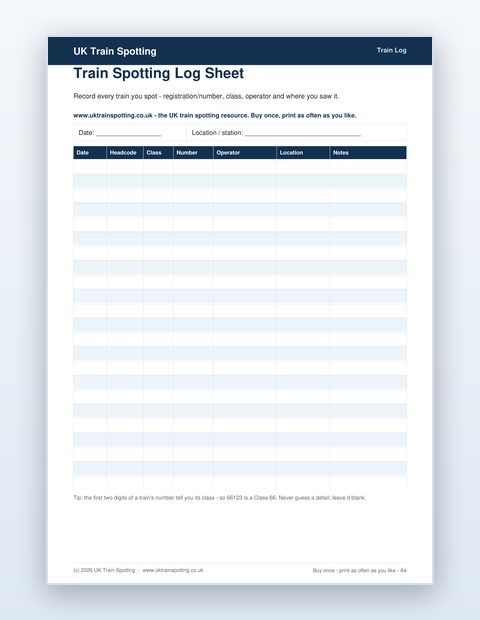
Most spotters note some or all of the following for each train:
A simple printable log sheet keeps all of this tidy — grab our free UK train log sheet to start.
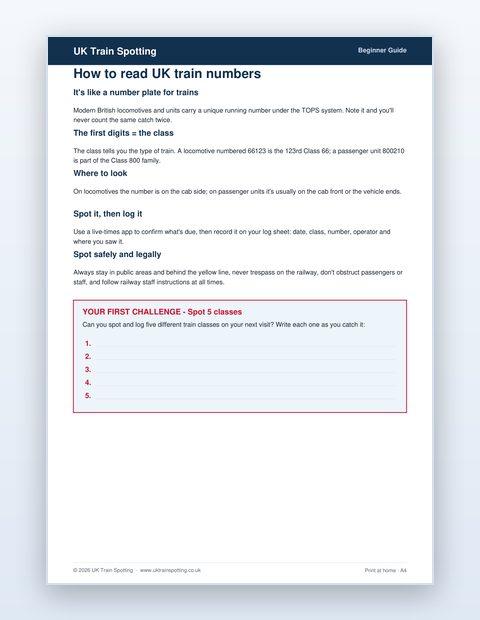
Modern British locomotives and multiple units use the TOPS numbering system. The first two digits usually tell you the class — the type of train — and the rest is the individual number. So a locomotive numbered 66123 is the 123rd of the Class 66 fleet. Passenger units work similarly (for example the Class 800 family). Once you learn a few common classes, you'll read numbers at a glance. Our starter pack includes a beginner cheat-sheet.
Start with almost nothing and add as you go:
The railway is a working environment, so a few rules keep everyone safe and welcome:
Follow those and you'll be a credit to the hobby — most railway staff are happy to see considerate enthusiasts.
Great early destinations are busy junctions where lots passes in a short visit. Our UK spotting locations guide covers classic spots like Crewe and Doncaster. When you're ready to turn spotting into a collecting challenge, the printable challenges and bundles add structure and fun.
Yes. Watching and photographing trains from public places such as station platforms (with a valid or platform ticket) is perfectly legal. What's not allowed is trespassing on railway property or going beyond public areas — always stay behind the yellow line and never enter the tracks.
No. A notebook and pen (or a printed log sheet) is all you need. Many spotters add a camera and a live-times app later, but you can begin with nothing but your eyes and something to write on.
All ages. It's a popular family day out — just keep younger children close and well behind the platform edge, particularly where fast trains pass.
Print it at home and record your first catches this weekend.
A free 10-line sample of our printable log sheet — try it, then get the full pack.

The essential printable log: date, headcode, class, number, operator, location and notes.
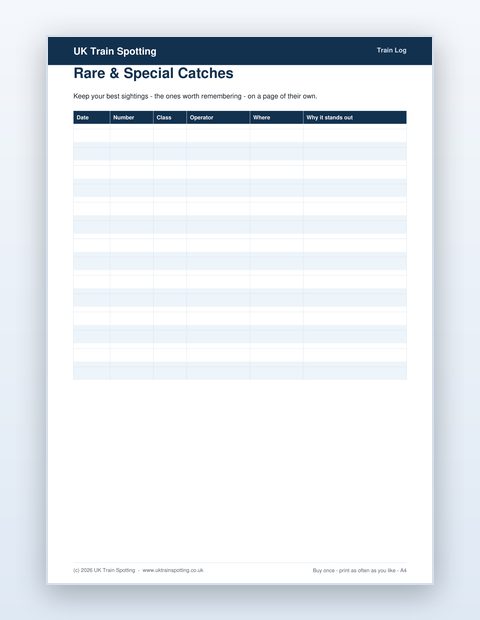

Every log sheet, checklist and challenge together — the best-value flagship pack.